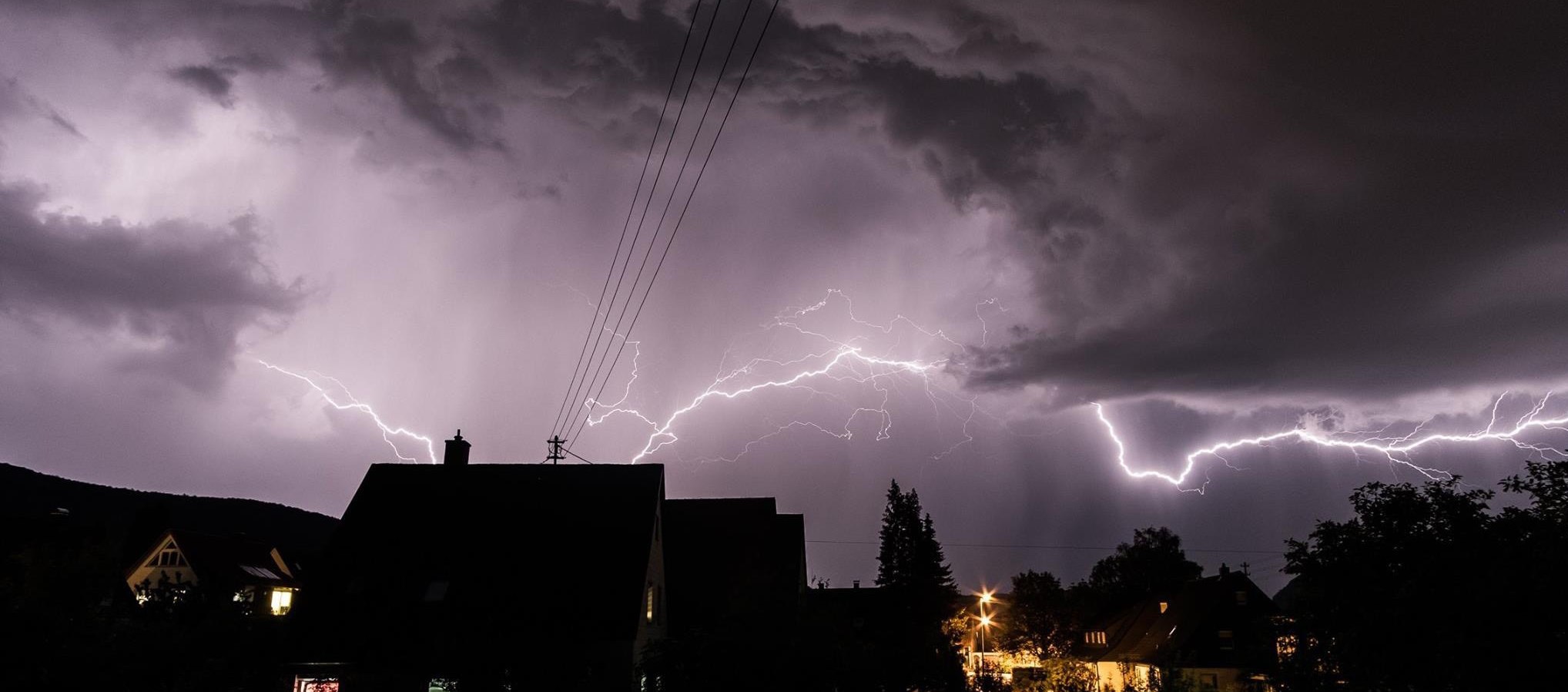
The Tucson Arizona monsoon season usually runs from June 15th – September 30th, with the storms peaking from the middle of July till mid-August.
The rain we experience in the monsoon season in Tucson Arizona accounts for about half of all rainfall totals for the year. Some years are better than others; while some are worse.
Local meteorologists are unable to predict how the monsoon season would pan out this year.
But overall, with the monsoon season upon us, Tucson Arizona may experience heavy rain, lightning strikes, high winds and unexpected dust storms often called haboobs and it is imperative to electrically protect your home during the monsoon season in Tucson Arizona.
For your safety, here are top 5 ways to electrically protect your home during monsoon season in Tucson Arizona.
Install surge protectors
When properly installed, a lightning protection system (LPS) can avert structural damage and fires created by lightning and electrocution typical to the Monsoon season in Tucson Arizona.
However, a lightning protection system (LPS) does only a little to prevent damage to the electrical and electronic equipment in your home.
Lightning strikes to communications systems and low voltage lines like land telephone lines and internet wire can all cause electrical surges and damage your electrical equipment.
There are cases of businesses in Tucson Arizona that have had their whole computer networks destroyed by lighting during the Monsoon season and residential homes in Tucson Arizona that have all their electronics explode.
Installing whole home surge protectors is needed if you live in elevations that are in high concentrations of lightning strikes.
Surges within the home can also cause electrical damages to your home appliances. AC units and electrical pool pumps are particularly vulnerable and have been known to spike when first powering up, causing damage to electrical circuits.
You can prevent all these by installing surge protectors. They can help prevent damage to your electrical and electronic appliances.
Install GFCI outlets outdoors
Use the recommended outdoor outlet. Ground Fault Circuit Interrupter, otherwise known as a GFCI outlet, is the recommended outlet by the National Electrical Code for safety.
GFCI is weather resistant. You can identify these outlets by the “WR” stamped on it (showing that it is weather resistant) and by their “TEST” and “RESET” buttons. Only Ground Fault Circuit Interrupter (GFCI) is safe for outdoor use.
GFCI protects you by breaking the electrical current when electricity leaks to ground which in most instances means that the electricity is conducted through you.
In wet weather as seen in the Monsoon season, GFCI’s are the difference between you receiving a mild shock and being electrocuted.
If you don’t have a GFCI outlet installed for all your outdoor electrical outlets, call in our professionals to get this done as quickly as possible.
Protect Your Outdoor Outlets
To prevent a shocking electrical experience, it is necessary to protect your outdoor outlets and exterior electrical panel.
Outdoor electrical outlets provide convenient access to power that helps to light your home yard and operate garden tools.
Failure to effectively protect these outlets can do a lot of damage to your equipment and pose serious danger to you and your loved ones.
Though most outdoor electrical outlets come with weatherproof covers to keep out moisture and dirt but it is essential to also put the following safety measures in place:
It is not enough to buy a GFCI outlet; it has to be properly installed as well for safety. Make sure your exterior outlets are water tight by adding a weatherproof cover.
Be sure to seal the connection to the wall and always use the proper external mounting brackets for the outlet.
These will help prevent moisture from getting into the outlet, causing tripped breakers or melted outlets.
By so doing, you’ll also protect yourself and your family against mild shock or electrocution as well as safeguarding the lifespan of your tools and equipment.
Ensure adequate grounding with the help of a three-bulb receptacle tester. If you are not sure of how to do this, call on professionals to check your installations.
Besides making sure you’ve got GFCI’s installed on all your outdoor electrical outlets in Tucson Arizona, you might also want to invest in weatherproof covers that protect outlets from water or moisture exposure even when electrical appliances and power tools are plugged in.
The small flip up tabs that cover your outdoor outlets are only enough to protect they are not in use.
Adding a properly installed weatherproof cover can safely allow the use of your outdoor electrical outlets even in the monsoon rain. It also safeguards against moisture.
Sometimes referred to as “bubble covers” or “flip ups,” weatherproof covers have become mandatory by the National Electrical Code.
They come in clear or smoke-colour and are designed with deep grooves and lids to allow for device or extension cord to run out of the bottom while protecting both the outlet and the extension cord form harsh weather elements.
For proper fit, it is imperative to choose a similar configuration as your GFCI outdoor outlet type and outlet design (double gang/4 outlet, single gang/2 outlet, etc.)
Have your external outlets been installed before you purchased your home? Do not assume they are the right kind or water tight. Call in professionals to check them for type and re-install if necessary.
Additionally, it is wise to shun working outdoors with electrically powered tools and equipment when it is wet outside.
Following this simple tip will significantly lower your risk of any electrical related injury.
Remove Exposed Extension Cords
Do not use permanent extension cords outdoors because extension cords are not as safe as permanent house wiring.
Placing them permanently outdoors is not safe and might cause an electrical fire of shock.
It is therefore very important to pay attention to exposed extension cords and remove them carefully.
Also, do not use non-grounded extension cords for outdoor power tools.
It is particularly dangerous in the Monsoon season in Tucson Arizona. Avoid leaving outdoor electrical equipment or power tools unattended to when plugged in.
This is hazardous and doing so creates shock or fire risks.
Protect Yourself
Never touch wiring or attempt to unplug electronics if a thunder is heard. Stop playing video games connected to the TV.
When thunderstorms are expected, unplug expensive electronics including stereo, TV, computer modem lines, and home entertainment centres when thunderstorms are expected.
Plumbing (sinks, showers, tubs and toilets) are dangerous and can conduct electricity from lightning strikes.
Alternatively, ensure that all outdoor outlets are GFCI-protected and make sure that your GFCI outlets are controlled by dedicated 20 amp circuits to reduce the risk of shock and/or electrocution.
Overall, safety of lives and properties during the Monsoon season is our priority and it is important to us that our Tucson Arizona clients are aware of ways to protect their homes and families electrically.
We strongly recommend the above tips be used to electrically protect your home and business.